

How to Spot Quality Handmade Jewelry: A 2026 Guide
Table of Contents
- What Makes Quality Handmade Jewelry Different
- Handmade vs. Mass-Produced Jewelry: Key Differences
- How to Check Silver Jewelry Quality
- Inspecting Gemstones and Stone Settings
- Handmade Jewelry Quality Checklist: What to Examine
- Verifying Maker and Materials: Proving Authenticity
- How to Care for Handmade Silver Jewelry
- Red Flags: Signs of Poor Craftsmanship
- Frequently Asked Questions
Last Updated: October 13, 2026
What Makes Quality Handmade Jewelry Different
Quality handmade jewelry represents a fundamental departure from factory production. When silversmith Leila at Inner Wild Jewelry crafts each piece by hand, the result carries marks of intentional creation that mass-produced jewelry simply cannot replicate.
The difference runs deeper than aesthetics. Handmade pieces are built to last, with construction methods that prioritize durability and repairability. A mass-produced ring stamped out by machinery follows rigid tolerances. A handmade ring shaped by a silversmith adapts to the stone, the metal, and the maker's artistic intent.
At Inner Wild Jewelry, this philosophy shapes every design. Each piece tells a story of intentional creation, from the choice of genuine Larimar or moonstone to the hand-hammered details that catch light differently depending on how you wear it. When you learn to spot these markers, you're not just evaluating jewelry, you're learning to recognize artistry.

Handmade vs. Mass-Produced Jewelry: Key Differences
The gap between handmade and mass-produced jewelry becomes obvious once you know where to look. Mass-produced pieces are engineered for speed and consistency. Handmade pieces are engineered for character and durability.
Mass-produced jewelry relies on molds, stamping machines, and assembly line processes. A ring gets pressed from a die, stones get set by automated equipment, and finishing happens in batch stages.
Handmade jewelry involves direct human decision-making at every stage. A silversmith chooses the metal thickness based on the stone's weight and the wearer's lifestyle.
The construction methods differ sharply. Mass-produced pieces often use thinner metal and rely on solder joints that are functional but visible under magnification.
One practical difference: repairability. A handmade piece can usually be resized, re-soldered, or modified by a skilled jeweler because the original construction is transparent. Mass-produced pieces sometimes cannot be safely altered without breaking them.
How to Check Silver Jewelry Quality
Silver quality begins with verification. Before examining craftsmanship, confirm you're actually holding sterling silver.
Hallmarks and Metal Purity
A hallmark is a stamped mark indicating metal purity. Sterling silver carries the hallmark "925" or "sterling," meaning the piece contains 92.5% pure silver. This is the industry standard for fine jewelry. Pieces marked "950" contain even higher silver content.
Look for hallmarks on the inside of rings, on the clasp of bracelets, or on the back of pendants. The hallmark should be crisp and clearly struck, not faint or poorly defined. A faint hallmark can indicate a counterfeit or a piece that's been worn so long the mark has faded, less common with quality work.
If you don't see a hallmark, ask the maker directly. Reputable artisans like those at Inner Wild Jewelry are transparent about their materials. If a seller cannot or will not confirm the silver content, that's a red flag.
Weight and Feel
Sterling silver has a specific density that creates a distinctive weight. Hold a piece in your palm. Quality silver jewelry should feel substantial, heavier than costume jewelry, which often uses base metals or plating. The weight should feel proportional to the size. A large ring should feel solid, not hollow or light.
Press the piece gently between your fingers. Sterling silver yields slightly under pressure but returns to shape. It doesn't feel brittle or overly rigid. This flexibility is one sign of genuine silver rather than a harder, more brittle alloy.
Temperature matters too. Silver conducts heat efficiently. A silver ring will feel cool against your skin initially, then warm to body temperature. Costume jewelry warms more slowly.
Inspecting Gemstones and Stone Settings
The gemstone and its setting are where quality becomes most visible. A poorly set stone will shift, scratch, or fall out. A well-set stone will endure decades of wear.
Examine the prongs or bezel holding the stone. Prongs should be smooth, evenly spaced, and securely gripping the stone. Run your fingernail gently across the prong, it should feel smooth, not rough or sharp.
For bezel settings (where metal wraps around the stone's edge), the metal should curve smoothly and sit flush against the stone. There should be no gaps between metal and gemstone.
Look at the stone itself under good light. Genuine gemstones like Larimar display natural color variation, subtle inclusions, and depth. A perfectly uniform stone in handmade jewelry is unusual, uniformity suggests synthetic or treated material.
Check for scratches on faceted gemstones. For opaque stones like Larimar, look for surface polish; a well-finished stone should have a smooth, even sheen.
Handmade Jewelry Quality Checklist: What to Examine
Quality handmade jewelry reveals itself through systematic inspection. Use this checklist to evaluate any piece.
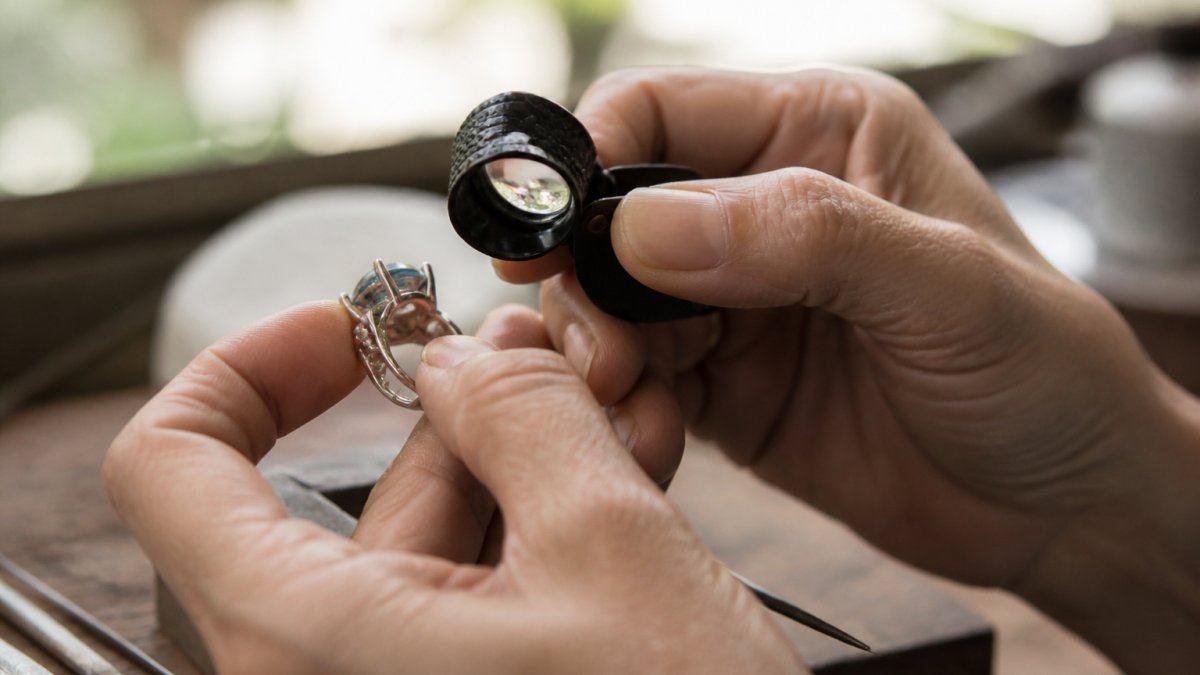
Craftsmanship and Construction Details
Examine solder joints, the places where metal pieces are fused together. Quality solder work is smooth and invisible or nearly invisible. Run your fingernail across joints. They should feel smooth, not bumpy or rough. Rough solder indicates rushed work.
Check the clasp on bracelets or necklaces. It should open and close smoothly with a satisfying click. A loose or stiff clasp signals poor construction. The metal around the clasp should be smooth and finished, not sharp or rough.
Look at how the stone is set. The metal holding the stone should be finished as carefully as the visible parts. Flip the piece over.
Examine any hollow areas. If a ring or pendant has hollow sections, the walls should feel sturdy and thick. Thin, flimsy walls suggest the piece will dent or break easily.
Finishing and Polish
A well-finished handmade piece shows consistent polish across all surfaces. Edges should be smooth and rounded, not sharp. The surface should have an even sheen, either matte or polished, depending on the design.
Look for file marks or scratches that weren't polished smooth. These indicate the maker didn't invest time in finishing. Quality handmade work invests in this final stage.
Run your finger along the inside of a ring. It should be as smooth as the outside. Makers who skip interior finishing are cutting corners.
Symmetry and Balance
Hold the piece at arm's length and assess its overall proportion. Both sides should mirror each other (unless the design is intentionally asymmetrical). Prongs should be evenly spaced around a stone. Hammered textures should be consistent across the piece.
The Element Ring - Larimar | Handmade Silver Ocean Inspired Ring // Size 7 →
Asymmetry isn't always a flaw, handmade work often celebrates intentional variation. But that variation should look purposeful, not accidental. A stone that sits slightly off-center in its setting looks like a mistake. Intentionally off-center designs should be clearly deliberate.
| Quality Indicator | What to Look For | What to Avoid |
|---|---|---|
| Solder joints | Smooth, invisible or nearly invisible | Bumpy, rough, or visible blobs of solder |
| Clasp mechanism | Smooth opening/closing with satisfying click | Loose, stiff, or unreliable closure |
| Surface polish | Even sheen across all surfaces | Inconsistent finish, scratches, file marks |
| Prong spacing | Even gaps around stone | Uneven or loose prongs |
| Interior finish | Smooth inside and outside | Rough interior, unfinished edges |
| Symmetry | Balanced proportions, intentional design | Accidental-looking asymmetry or wobble |
Verifying Maker and Materials: Proving Authenticity
Knowing the maker's story adds confidence to your purchase. Reputable artisans stand behind their work and are transparent about their process.
Ask the maker about their materials. Where does the silver come from? Are the gemstones ethically sourced? A maker who can answer these questions in detail is invested in their work.
Request information about the maker's process. How long does each piece take? What techniques are used?
Look for maker's marks. Some artisans stamp their initials or a maker's mark on their pieces. This is a sign of accountability.
For online purchases, examine photos carefully. Ask for close-up shots of the craftsmanship. Request images showing the hallmark, the solder joints, and the stone setting.
Check for a return policy and warranty. Quality makers stand behind their work. If a piece fails due to poor craftsmanship, a reputable maker will repair or replace it.
How to Care for Handmade Silver Jewelry
Proper care extends the life of handmade silver jewelry dramatically. Sterling silver tarnishes over time, this is normal and not a sign of poor quality.
Store jewelry in a dry place. Moisture accelerates tarnishing. Use anti-tarnish bags or cloth for pieces you wear infrequently.
Clean silver gently. A soft cloth works for regular maintenance.
For gemstones like Larimar, avoid soaking in water for extended periods. Water can weaken the setting over time. Clean with a soft, slightly damp cloth instead.
Remove jewelry before swimming, showering, or exercising. Chlorine and salt water accelerate tarnishing. Sweat can cause skin discoloration if the jewelry contains impurities.
Have your jewelry professionally cleaned and inspected annually if you wear it regularly. A jeweler can check the setting, tighten prongs if needed, and polish the piece back to its original shine.
Red Flags: Signs of Poor Craftsmanship
Certain signs indicate a piece was not made with care or quality materials.
A hollow-sounding ring when tapped suggests thin walls or poor internal construction. Quality rings feel solid throughout.
Visible glue or adhesive holding a stone in place is a major red flag.
Rough or sharp edges anywhere on the piece indicate incomplete finishing. Quality handmade work invests in smooth, finished surfaces throughout.
A clasp that breaks or fails immediately suggests poor material or construction. Test the clasp before purchasing if possible.
Significant color variation between the metal and the stone setting suggests mixed metals or plating.
Tarnish that appears only in certain spots, or that doesn't respond to cleaning, can indicate plating over base metal.
A piece that feels flimsy or bends easily under gentle pressure suggests thin metal or poor structural design.
If a maker cannot answer basic questions about materials, process, or sourcing, that's a warning sign.
Learning to spot quality handmade jewelry transforms how you shop. The Element Ring in Larimar or the Tempest Halo Necklace with authentic shark tooth both exemplify the markers of quality handmade jewelry, genuine gemstones, sterling silver construction, and visible attention to every detail.

Frequently Asked Questions
What's the main difference between fine jewelry and fashion jewelry?
Fine jewelry uses precious metals like sterling silver and genuine gemstones, while fashion jewelry typically uses base metals and synthetic stones. Fine handmade jewelry is built to last decades with proper care, whereas mass-produced costume pieces often tarnish, break, or fade within months. Quality handmade jewelry maintains its value and can be repaired, making it a better investment for pieces you'll wear regularly.
How can you tell if handmade jewelry is high quality?
Inspect the solder joints, prongs, and edges for smooth, even work. Check for hallmarks indicating metal purity (like 925 for sterling silver). Feel the weight, quality pieces have substantial heft. Examine symmetry and balance, and look for consistent finishing without scratches or rough spots. Ask the maker about their process and materials. High-quality handmade jewelry shows attention to detail in every element, from the setting to the clasp.
Does handmade jewelry last longer than mass-produced jewelry?
Yes, when made by skilled artisans using quality materials. Handmade pieces are often built with stronger construction techniques, better metal purity, and genuine gemstones. Mass-produced jewelry frequently uses thinner metals, weaker settings, and synthetic stones that degrade quickly. Handmade silver jewelry from reputable makers can last a lifetime with proper care, while factory-made pieces often require replacement within a few years.
What should you look for when buying handmade jewelry?
Verify the maker's credentials and ask about their process and materials. Check for hallmarks and metal purity stamps. Inspect the piece in person or request detailed photos showing construction details, solder joints, and gemstone settings. Look for consistent finishing and smooth edges. Ask about durability, repairability, and any warranty. Choose makers who are transparent about their work and willing to answer questions about craftsmanship and sourcing.
How can you check the quality of silver jewelry?
Look for the 925 hallmark, which indicates sterling silver (92.5% pure). Check the weight, genuine silver feels substantial. Examine solder joints for smooth, even seams without gaps or rough spots. Quality sterling silver may tarnish over time. Inspect prongs and settings for secure, even work. Ask the maker about their silver sourcing and whether they use recycled or ethically sourced materials.
What are the signs of poor craftsmanship in jewelry?
Watch for rough edges, uneven solder joints, and visible gaps in settings. Poor-quality pieces may have loose prongs, weak clasps, or inconsistent finishing. Scratches, dents, or unpolished surfaces indicate rushed work. Asymmetrical designs or imbalanced settings suggest lack of attention to detail. If the maker can't explain their process or won't answer questions about materials, that's a red flag. Pieces that feel lightweight for their size often use low-quality metals.