

Ocean Jewelry Alternatives to Boheme Wild
Table of Contents
- What Makes Ocean Jewelry Different from Mass-Produced Pieces
- Handmade Sterling Silver Ocean Jewelry for Coastal Aesthetics
- Best Sustainable Jewelry Brands 2026: What Defines Ethical Ocean Pieces
- Waterproof Ocean Jewelry: Materials That Resist Saltwater and Tarnish
- How to Choose Durable Beach Jewelry That Lasts
- Conclusion: Finding Your Ocean-Inspired Jewelry Match
- Frequently Asked Questions
Last Updated: October 4, 2026
What Makes Ocean Jewelry Different from Mass-Produced Pieces
Ocean jewelry alternatives stand apart because they capture authenticity mass production cannot: each handcrafted piece carries the maker's intention, the material's history, and your personal connection to the sea.
Handmade ocean jewelry uses sterling silver, genuine gemstones, and sustainably sourced elements, while mass-produced alternatives rely on plating that tarnishes and synthetic stones. You're wearing something shaped by human hands, not molded in a factory.
What matters most is knowing your purchase supports artisans, your jewelry won't fall apart after a season, and each piece is genuinely one-of-a-kind.
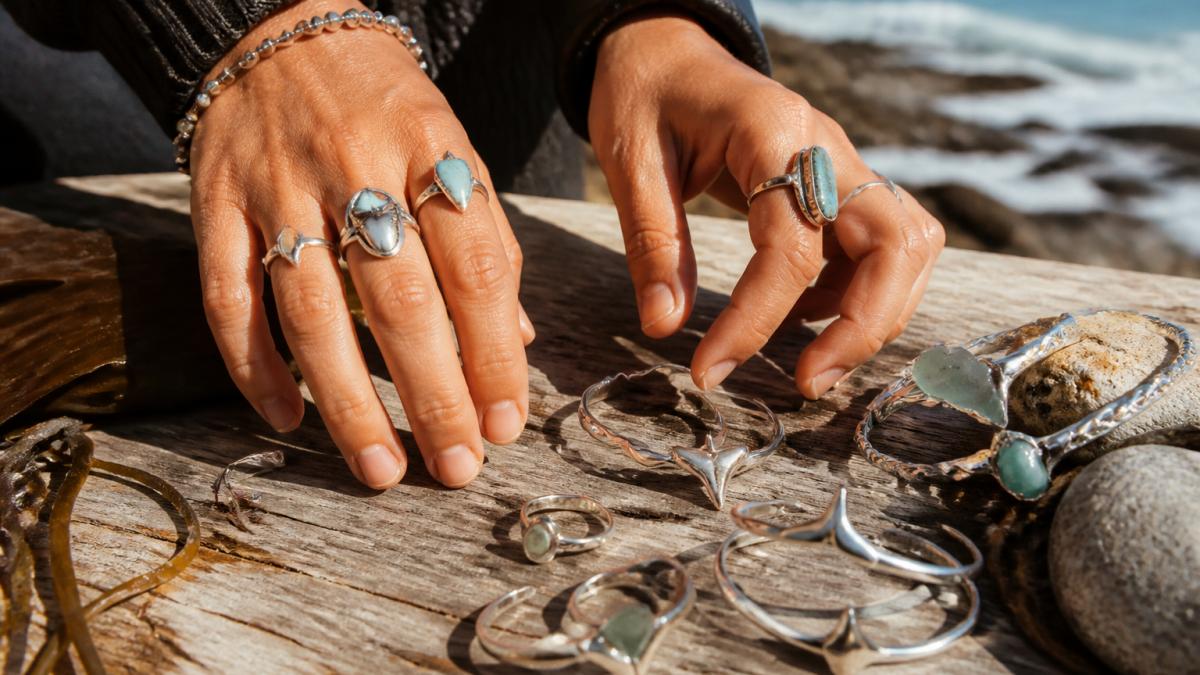
Handmade Sterling Silver Ocean Jewelry for Coastal Aesthetics
Handmade sterling silver ocean jewelry resists tarnish better than plated alternatives and develops a natural patina over time. Unlike gold plating that flakes away, sterling silver is the material itself and lasts generations.
The coastal aesthetic draws from the 90s beach-inspired movement: organic textures, sea-life motifs, and pieces that feel found rather than designed, quiet reminders of your connection to the ocean.
Gemstone Rings with Ocean-Inspired Stones
Gemstone rings featuring Larimar and Moonstone bring the sea directly to your hand. Larimar captures the exact color of tropical waters; Moonstone reflects light like moonlight on waves.
The Element Ring in Larimar ($75) is a minimalist design handcrafted in sterling silver. The Larimar and Moonstone Balance Ring ($100) pairs two stones, symbolizing the meeting of sea and sky. Both work as everyday pieces or meaningful talismans.

Sea Glass and Shell Bangles
Sea glass and shell bangles represent the most literal ocean connection, materials shaped by the sea itself. Sea glass forms when discarded bottles tumble in the ocean for years, emerging as frosted gems.
The Ghost Tide Bangle ($60, made to order) pairs a freshwater pearl with sea glass or shell in a handmade silver bangle. These bangles layer beautifully together, creating a story of calm and texture.
Shark Tooth Statement Cuffs
Shark tooth cuffs make bold statements about ocean identity. Modern versions use sustainably sourced fossilized shark teeth, meaning no living sharks are harmed.
Inner Wild Jewelry's Bite Club collection includes The Big One ($295) with a 1.25-inch black shark tooth fossil, The Sandy Tooth ($155), and The Classic ($155). Each purchase supports shark conservation and research.
Best Sustainable Jewelry Brands 2026: What Defines Ethical Ocean Pieces
Sustainable ocean jewelry means transparent sourcing, ethical labor practices, and commitment to ocean conservation. The best sustainable jewelry brands 2026 track where materials come from and where profits go.
Handmade jewelry inherently carries lower environmental impact than mass production and means the maker cares about where materials originate and whether their work supports conservation efforts.
Inner Wild Jewelry embodies this approach. Every piece is handcrafted by silversmith Leila, eliminating factory waste. The Bite Club shark tooth cuffs explicitly state that every purchase supports shark conservation and research, a direct commitment blending 90s beach-inspired aesthetics with genuine wildlife conservation work.
When evaluating sustainable ocean jewelry, ask: Who made this? Where did the materials come from? Where does my money go? Brands that answer clearly deserve your trust; those using vague language like "eco-friendly" without specifics are worth questioning.
Waterproof Ocean Jewelry: Materials That Resist Saltwater and Tarnish
No material is truly waterproof indefinitely, but understanding how materials degrade in saltwater helps you choose pieces that survive multiple beach seasons.
Sterling Silver and Saltwater Exposure
Sterling silver resists corrosion far better than plated alternatives but develops tarnish, a cosmetic, reversible surface layer. The Tempest Halo Necklace ($100) combines sterling silver with fossilized shark tooth and abalone shell, the silver will tarnish but won't corrode or weaken.

Gold Plating: Why It Fails in Saltwater
Gold plating is the weakest choice for ocean jewelry. Avoid plated jewelry for ocean wear entirely.
Stainless Steel: The Middle Ground
Stainless steel resists corrosion better than plated metals but lacks sterling silver's aesthetic qualities. It's durable and low-maintenance but cannot be resized or extensively repaired.
Gemstones in Saltwater: Larimar, Moonstone, and Abalone
Natural gemstones like Larimar and Moonstone are inherently stable in saltwater. Abalone shell maintains its iridescent finish indefinitely in saltwater.
Sea Glass and Shells: Already Ocean-Tested
Sea glass and shells are the most saltwater-resistant materials available because they've already survived years in the ocean. These materials won't degrade further in ocean conditions.
Shark Tooth Fossils: Virtually Indestructible
Modern shark tooth jewelry uses fossilized teeth (no living sharks harmed), making them among the most durable ocean jewelry materials. Saltwater causes no degradation to the tooth itself.
Real-World Durability Timeline
The Element Ring - Larimar | Handmade Silver Ocean Inspired Ring // Size 7 →
If you wear ocean jewelry daily and swim or shower in it: Sterling silver maintains structural integrity indefinitely. Sea glass, shells, and shark teeth show no saltwater-related degradation.
Maintenance Protocol for Maximum Longevity
Post-saltwater care determines longevity. Rinse with fresh water after saltwater exposure. Dry immediately and store in a cool, dry environment.
How to Choose Durable Beach Jewelry That Lasts
Choosing durable beach jewelry means prioritizing materials over trends and understanding the repair and restoration pathway. Knowing when to restore versus replace determines whether your jewelry becomes a lifelong piece or a seasonal purchase.
Material Selection Framework
| Material | Durability in Saltwater | Best For | Maintenance Frequency | Restoration Difficulty |
|---|---|---|---|---|
| Sterling Silver | High (tarnish only) | Daily wear, statement pieces | Monthly polishing if worn constantly | Easy; home polishing or professional cleaning |
| Gemstones (Larimar, Moonstone) | Very High | Rings, centerpieces | Quarterly gentle cleaning | Easy; professional cleaning only if adhesive fails |
| Sea Glass & Shells | Very High | Bangles, layering | Minimal; rinse and air dry | Difficult; cracks require replacement |
| Shark Tooth Fossils | Exceptional | Statement cuffs | Minimal; setting may tarnish | Easy; polish the silver setting only |
| Gold Plating | Low | Avoid for ocean wear | Constant care, still fails | Impossible; replating costs exceed replacement |
| Stainless Steel | Medium-High | Budget-conscious daily wear | Quarterly rinsing | Moderate; pitting cannot be reversed |
Identifying Your Wearing Pattern
Answer three questions: Do you wear jewelry daily or seasonally? Do you swim in your jewelry or remove it before water? Are you willing to maintain pieces, or do you prefer low-maintenance jewelry? Sterling silver requires monthly polishing if worn daily in saltwater; gemstones and shells require only rinsing.
Building a Layered Collection
Build a layered collection that offers flexibility and reduces wear on individual items. A $60 sea glass bangle paired with a $75 Larimar ring creates more visual interest than a single $135 piece, and rotating between them extends lifespan. Shark tooth cuffs ($155-295) work as statement pieces worn 2-3 times monthly rather than daily.
Understanding Restoration and Repair Services
Sterling Silver Restoration: Tarnished sterling silver is fully restorable through ultrasonic cleaning or chemical dips ($15-40). Home polishing with a silver cloth works fine for simple pieces. If a stone has loosened due to adhesive failure, professional re-setting costs $30-75.
Gemstone Restoration: Dulled Larimar and Moonstone rings can be professionally polished ($20-50). Loose stones require re-setting with saltwater-rated epoxy ($40-100), extending the piece's life by years.
Sea Glass and Shell Restoration: Cracked shells can sometimes be reset into a new silver setting ($50-150). Slightly clouded pieces can be professionally polished ($15-30).
Shark Tooth Restoration: The tooth itself never needs restoration. Professional polishing of the setting costs $20-40; re-securing a loosened tooth costs $30-60.
When to Restore vs. Replace
Restore a piece if the material is undamaged and it's made from durable material. Replace it if the base material is corroded or it's made from low-durability material.
Finding Restoration Services
When seeking repair, ask: "Do you have experience restoring saltwater-exposed jewelry?"
Many independent jewelry makers offer restoration services directly. Ask when purchasing whether the maker offers future restoration or repair services.
Long-Term Value Calculation
The handmade piece is more expensive upfront but can be a more sustainable long-term choice.
Conclusion: Finding Your Ocean-Inspired Jewelry Match
The ocean calls to different people in different ways. Some feel the pull toward subtle, daily-wear pieces that whisper your connection to the sea. Others want bold statements that announce their ocean identity to the world.
Inner Wild Jewelry offers both. The handmade sterling silver pieces, gemstone rings, sea glass bangles, and necklaces, work as everyday reminders of your inner wild. The shark tooth cuffs make unapologetic statements about who you are and what you value. Every piece is crafted by silversmith Leila with the same intention: to create wearable art that brings joy and supports ocean conservation.
When you choose handmade ocean jewelry alternatives over mass-produced pieces, you're choosing quality that lasts, materials that matter, and a maker who cares. You're choosing pieces that develop character over time rather than fade away. You're choosing to support artisans and conservation efforts with every purchase.
Find your piece at Inner Wild Jewelry and wear your ocean-hearted spirit boldly. Each handmade creation carries the soul of the sea, and the story of your connection to it.
Frequently Asked Questions
What materials are best for ocean jewelry that won't tarnish?
Sterling silver is the gold standard for ocean jewelry. Pieces featuring sea glass, shells, and natural gemstones like Larimar add durability and visual interest while maintaining that ocean-inspired character.
What defines the best sustainable jewelry brands 2026?
Sustainable ocean jewelry brands prioritize ethical sourcing, handmade craftsmanship, and transparent supply chains. Look for brands that use recycled materials, sustainably sourced gemstones, and responsibly harvested natural elements like sea glass and shells. Brands that donate proceeds to ocean conservation and wildlife protection, like those supporting shark research, demonstrate genuine commitment beyond marketing language.
How do I know if waterproof ocean jewelry will actually hold up to swimming?
True waterproof ocean jewelry combines sterling silver construction. Pieces designed for layering and stacking allow you to rotate wear, reducing constant water contact on any single piece. Check that clasps and closures are sturdy, and always rinse jewelry with fresh water after ocean swimming.
Are handmade ocean jewelry pieces more expensive than factory-made alternatives?
Handmade ocean jewelry typically costs more because each piece requires skilled artisan labor, genuine materials, and individual attention to detail. A handcrafted sterling silver ring with a natural Larimar stone ($75-$100) reflects hours of design and craftsmanship versus mass-produced imports. The trade-off is durability, uniqueness, and often ethical sourcing practices that factory production cannot match.