

Handmade Jewelry Wait Times Explained
Table of Contents
- Why Handmade Jewelry Takes Longer Than Mass-Produced Pieces
- How Long Does Custom Jewelry Take from Order to Delivery
- What Causes Handmade Jewelry Order Delays
- The Production Process: From Design to Finished Piece
- How to Check Your Custom Jewelry Order Status
- Handmade Jewelry Shipping Time and Delivery Expectations
- Planning Ahead: Rush Orders, Deadlines, and Gift Timelines
- What to Do If Your Handmade Jewelry Order Is Delayed
- Frequently Asked Questions
Last Updated: October 20, 2026
Why Handmade Jewelry Takes Longer Than Mass-Produced Pieces
Handmade jewelry wait times are longer because each piece is crafted individually by hand, not stamped out on an assembly line.
Mass-produced jewelry is made in batches using molds and machines.
The difference shows in quality. Handmade pieces tend to be more durable because the maker controls every step.
At Inner Wild Jewelry, each ocean-inspired piece is crafted by silversmith Leila. This means your custom jewelry order goes into a queue.
How Long Does Custom Jewelry Take from Order to Delivery
The timeline for handmade jewelry depends on several factors. Simple designs might be ready in 2-4 weeks. Complex custom orders can take 6-12 weeks or longer. The key variables are design complexity, material availability, and current order volume.
When you place an order, it enters the maker's queue. Leila at Inner Wild Jewelry typically works through orders in the sequence they arrive, though rush options may be available for urgent deadlines.
Simple Designs vs. Complex Custom Orders
A simple design, like a basic silver band or a straightforward pendant, moves faster through production. These pieces follow a familiar pattern. The artisan knows the steps. Materials are usually in stock. Expect 2-4 weeks for simple designs.
Complex custom orders take much longer. If you're requesting a unique design, multiple gemstones, intricate engraving, or special materials, the timeline extends. The artisan may need to source specific stones. The design phase itself can take a week or two.
Ask your maker upfront: is this a "standard design with custom details" or a "fully custom creation from scratch"? That distinction alone can shift your timeline by 4-6 weeks.
Typical Wait-Time Ranges by Jewelry Type
Different jewelry types have different production demands:
| Jewelry Type | Typical Wait Time | Why |
|---|---|---|
| Simple rings (standard sizes) | 2-4 weeks | Familiar pattern, quick shaping and finishing |
| Custom rings (unique design) | 6-10 weeks | Design work, sizing adjustments, stone setting |
| Pendants (basic) | 2-3 weeks | Fewer components, straightforward assembly |
| Pendants (custom with stones) | 5-8 weeks | Stone sourcing, setting, detailed work |
| Bracelets (beaded or linked) | 3-6 weeks | Stringing, joining, clasp attachment |
| Bracelets (custom metalwork) | 7-12 weeks | Shaping, joining, potential stone work |
| Earrings (pairs, standard) | 2-4 weeks | Matching pairs, straightforward assembly |
| Earrings (custom statement) | 6-10 weeks | Design uniqueness, material sourcing |
These ranges assume normal order volume. During peak seasons (holiday gift-buying, summer weddings), wait times can extend by 2-4 weeks.
What Causes Handmade Jewelry Order Delays
Understanding delay factors helps you set realistic expectations and plan accordingly. Most delays fall into a few predictable categories.
Material Availability and Stone Selection
The right materials aren't always in stock. If you've requested a specific gemstone, a particular shade of turquoise, a rare pearl, or a specific grade of amethyst, your maker may need to source it.
Some stones are seasonal. Certain pearls are harvested only at certain times of year. Rare gemstones may require special orders from suppliers.
Metal availability is less of an issue for common metals like silver and gold. But specialty metals, rose gold alloys, recycled silver, or rare finishes, may need to be ordered. This adds time.
Design Complexity and Revision Requests
The more detailed your design, the longer production takes. Intricate metalwork, multiple stone settings, engraving, and custom details all require extra time.
Revision requests also extend timelines. If you ask for changes after the design phase begins, your maker has to rework the piece. One revision might add a week.
To avoid delays, finalize your design before production starts. Ask questions about the design upfront. Confirm colors, sizes, and details in writing. This prevents misunderstandings that lead to revisions.
Order Volume and Queue Timing
When your maker is busy, your order waits. If Leila at Inner Wild Jewelry has 20 orders ahead of yours, you'll wait longer than if she has 3.
Order volume is unpredictable. A maker might have a quiet month, then suddenly get swamped. This affects your timeline.
The best strategy: ask your maker about current wait times when you order.
The Production Process: From Design to Finished Piece
Understanding how handmade jewelry is actually made explains why it takes time. The process involves multiple stages, each requiring skill and attention.
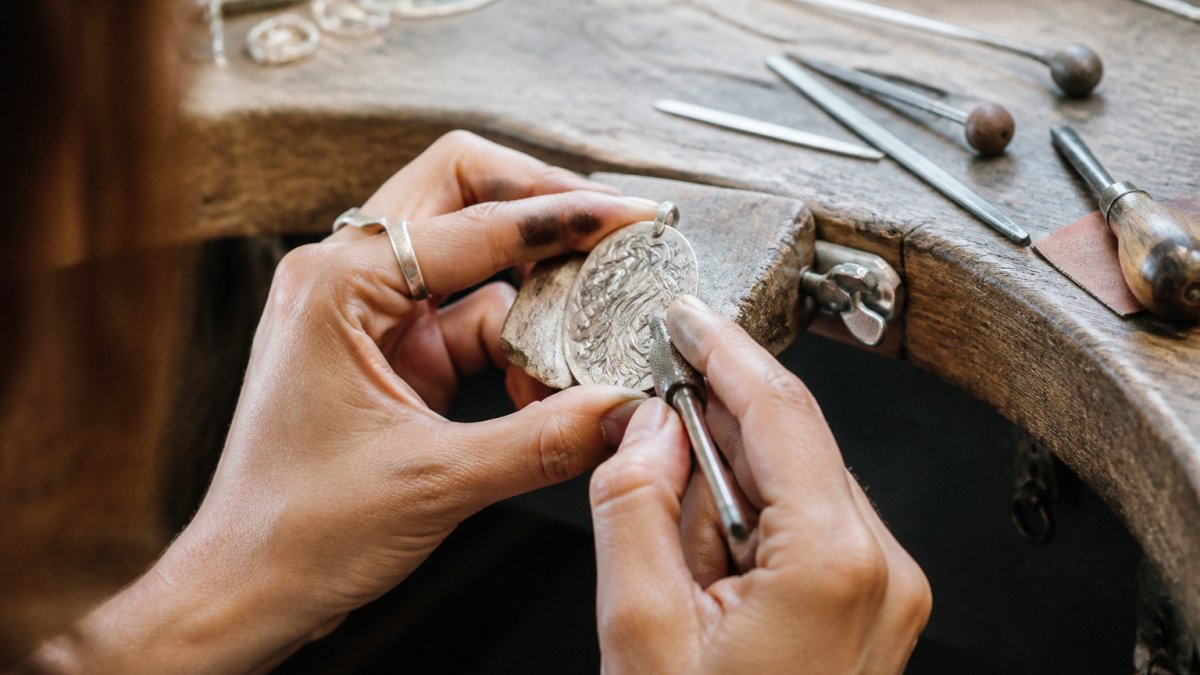
Design and Shaping
The process starts with design. Your maker sketches or discusses your vision. They consider proportions, balance, and how the piece will wear.
Once the design is approved, shaping begins. For silver jewelry, the artisan starts with raw metal. They heat it, hammer it, file it, and bend it into the desired form.
Shaping is slow work. A simple band might take 2-3 hours. A complex pendant with curves and details might take 8-12 hours spread over several days.
Joining, Finishing, and Quality Inspection
After shaping, pieces need to be joined together. If your design has multiple components, a stone setting, a clasp, decorative elements, these are soldered or fastened together.
Finishing comes next. The artisan polishes the metal, removes tool marks, and creates the final shine. For some designs, texturing or patina work happens here.
Finally, quality inspection. The maker checks for weak joints, uneven surfaces, stone security, and overall durability.
How to Check Your Custom Jewelry Order Status
Waiting for your order is easier when you know what's happening. Most makers provide status updates at key stages.
When you place your order, ask your maker for a communication plan. How often will they update you?
Many makers provide updates at these milestones:
- Order confirmed (1-2 days after purchase)
- Design approved or in progress (1-2 weeks)
- Production started (week 3-4 typically)
- Finishing phase (week 5-6 for standard pieces)
- Quality inspection complete (week 6-8)
- Ready to ship (final week)
If you don't receive updates, reach out. Ask for a status check.
Don't assume silence means delay. Sometimes makers are focused on the work and don't send updates unless asked.
Handmade Jewelry Shipping Time and Delivery Expectations
Once your piece is complete, shipping begins. This is a separate timeline from production.
Most makers ship within 3-5 business days of completion. They need time to package safely, print labels, and drop off at the carrier.
Shipping time depends on your location and the carrier:
- Standard shipping: 5-10 business days
- Expedited shipping: 2-3 business days
- Overnight shipping: 1 business day
Add these shipping days to your production timeline.
Track your shipment. Most makers provide a tracking number. You'll see exactly where your package is and when it arrives.
If you need your jewelry by a specific date, add 2-3 weeks to your deadline when ordering. This accounts for production time plus shipping delays (weather, carrier backups, etc.).
Planning Ahead: Rush Orders, Deadlines, and Gift Timelines
If you need handmade jewelry for a specific date, planning is critical. Last-minute orders rarely work for custom pieces.
When Rush Orders Are Possible
Some makers offer rush options. These cost more but move your order to the front of the queue. Rush typically means 50-100% premium on the price, and it only works if the maker has capacity.
Rush is most likely to succeed for:
- Simple designs with no custom elements
- Orders using materials already in stock
- Pieces that don't require stone sourcing
- Times when the maker isn't already swamped
Rush is unlikely to work for:
- Complex custom designs
- Orders requiring specific rare stones
- Holiday seasons (December, June, July)
- Orders placed less than 2 weeks before the deadline
Ask your maker directly: "Can you rush this order?" They'll tell you honestly whether it's possible and what the cost is.
How to Estimate Completion for a Specific Order
To estimate your order's completion date, you need two numbers:
- Current queue time: How many weeks until your maker starts your piece?
- Production time for your specific design: How many weeks to complete it?
Add these together, then add shipping time.
Example: You order a custom ring on October 20. The maker says "I have 4 weeks of orders ahead of you." Your design is moderately complex, so production will take 6 weeks. That's 4 + 6 = 10 weeks of production. Add 1 week for shipping. Your estimated delivery is around January 5.
Ask your maker for these specific numbers when you order. They can usually estimate within 1-2 weeks of accuracy.
What to Do If Your Handmade Jewelry Order Is Delayed
Delays happen. Materials get delayed. Life interrupts. A maker might get sick or face unexpected challenges.
If your order is late, here's how to respond:
First, confirm the delay. Don't assume. Reach out and ask: "My order was estimated for [date]. It hasn't arrived. Can you give me a status update?" Sometimes your timeline estimate was off, or the piece is actually ready but you haven't received the shipping notification.
Third, understand the cause. Was it a material delay? A design revision? High order volume?
Fourth, discuss solutions. Depending on why it's delayed:
- Material delay: Ask if a substitute is possible, or how much longer the original material will take
- Design issue: Ask if simplifying the design speeds things up
- Queue delay: Ask if a rush option is available to move you forward
Fifth, get it in writing. Once you have a new timeline, ask your maker to confirm it in an email.
Most delays are resolved within 2-4 weeks.
For orders from Inner Wild Jewelry, Leila communicates directly with customers.
Frequently Asked Questions
How long does handmade jewelry usually take to make?
Handmade jewelry timelines vary based on complexity and customization. Simple, ready-made designs may ship within 1-2 weeks, while custom orders with personalization, engraving, or specific stone selections typically take 3-6 weeks. Highly intricate pieces requiring special materials or extensive revision may take 8-12 weeks. The artisan's current order queue and any delays in material availability also affect the final completion date. Always check with the maker for a specific estimate on your piece.
Why do custom jewelry orders take so long?
Custom jewelry orders take longer because each piece is made individually from scratch, not pulled from inventory. The maker must source materials, design the piece, shape and join the metal, set any stones or inclusions, finish the surface to achieve the desired shine, and inspect for durability and quality. Unlike mass-produced jewelry, handcrafted pieces require attention to detail at every stage. Material availability, design revisions, and the maker's current workload all contribute to longer turnaround times compared to factory-made alternatives.
Can I request a rush order for handmade jewelry?
Many artisans offer rush options, though availability depends on their current order queue and the complexity of your design. Rush orders typically cost more and require direct communication with the maker to confirm feasibility. Simple designs may be expedited more easily than intricate custom pieces. If you have a deadline, such as a wedding, anniversary, or gift-giving date, contact the artisan as early as possible to discuss your timeline and explore whether a rush slot is available.
Does the quoted turnaround time include shipping?
Turnaround times quoted by handmade jewelry makers typically refer to the production and crafting period only, not shipping. Once your piece is complete and inspected, it enters the shipping phase, which usually adds 3-7 business days depending on your location and the carrier. Always ask the maker whether their quoted lead time includes shipping or if shipping is added after the piece is finished. This distinction is crucial when planning for gift deadlines or important dates.
Handmade jewelry takes longer because it's made with care, not speed. Understanding why wait times exist helps you plan better and appreciate the craftsmanship you're receiving. When you order from Inner Wild Jewelry, you're not just buying a piece, you're investing in time, skill, and artistry. That investment is worth the wait.