

Everyday Wear Handmade Silver Rings: A Guide
Table of Contents
- Why Handmade Silver Rings Are Worth the Investment
- What to Look for in Sterling Silver Rings for Everyday Wear
- Silver Ring Sizing: Getting the Perfect Fit
- How to Clean Sterling Silver Rings Safely
- Silver Ring Tarnish Prevention and Long-Term Care
- Choosing Handmade Designs That Work for Your Lifestyle
- Frequently Asked Questions
Last Updated: October 15, 2026
Why Handmade Silver Rings Are Worth the Investment
Handmade silver rings offer what mass-produced jewelry cannot: authenticity, durability, and a connection to the craftsperson.
At Inner Wild Jewelry, each sterling silver ring is handcrafted by silversmith Leila for everyday wear.
The real value shows over time: a well-made sterling silver ring develops a patina, slight scratches, a deepened finish, the way it molds to your hand.
Many people hesitate at the price point, but a $75 handmade ring worn daily for five years costs roughly $0.04 per day.
What to Look for in Sterling Silver Rings for Everyday Wear
What separates a ring that thrives with daily use from one that deteriorates quickly comes down to material choice, construction method, and design durability.
Material and Purity Standards
When shopping for handmade silver rings, look for the 925 hallmark stamped inside the band, which guarantees sterling silver purity.
Alloy quality matters: higher-grade sterling silver resists tarnishing better and holds its finish longer.
Avoid anything labeled "silver-plated" or "silver-coated" for everyday wear, the thin layer of silver over base metal wears away within months.
Design Durability and Construction
Construction determines how a ring holds up to daily life. Handmade rings built with traditional silversmithing techniques, like those crafted at Inner Wild Jewelry, maximize strength and longevity.
Look for substantial silver weight, thin, delicate bands break more easily. A band thickness of at least 2-3mm provides durability without excess bulk.
Pay attention to how gemstones are set. Bezel settings (where the stone is surrounded by a metal rim) protect better than prong settings, which catch on clothing. The Element Ring from Inner Wild Jewelry uses a bezel setting with genuine Larimar, keeping the stone secure through daily wear.

Handcrafted construction also lets the silversmith reinforce weak points and ensure even thickness.
Silver Ring Sizing: Getting the Perfect Fit
Getting the right ring size is non-negotiable for everyday wear. Too loose and it slips off; too tight and it restricts circulation. The perfect fit sits snug but slides smoothly over your knuckle.
How the US Ring Size Scale Works
US ring sizes run from 3 to 13, with half sizes available from most jewelers. Each full size is roughly 0.4 mm of internal diameter and each half size about 0.2 mm, often the difference between a ring that spins and one that stays put.
Your size varies between fingers, the ring finger commonly runs a half size smaller than the middle finger and a full size smaller than the index finger. Measure the specific finger you'll wear it on.
Measure at the Right Time of Day
Finger size changes throughout the day: smallest in the early morning, largest in the late afternoon and evening, and larger still in warm weather or after salty meals and exercise.
For everyday rings, measure in the late afternoon or evening, when your finger is at its larger end. If you're between two sizes, size up, a loose ring is easier to adjust than a tight one is to stretch.
Account for Band Width
Band width changes fit more than most shoppers expect: a 2 mm band and a 6 mm band in the same stated size don't feel the same, because wider bands cover more of the finger and feel tighter.
Jewelers commonly add a quarter to a half size for bands wider than about 4 mm, and up to a full size for bands 8 mm or wider.
Sizing for Stacking Rings
Stacking changes the math: three or more rings on one finger occupy more vertical space and press against each other. Two adjustments help:
- Size the stack, not the individual ring. Measure your finger with a stack of the rings you plan to wear together, or add a quarter size to your single-ring measurement for a stack of three or more.
- Keep the widest ring in the middle. A wider center ring with thinner rings on either side distributes pressure more evenly and reduces the chance that the stack pinches.
If you plan to mix and match over time, size for the largest stack you expect to wear.
At-Home Measurement Methods That Actually Work
If you can't visit a jeweler, two methods are reliable:
- Printable ring sizer or size chart. Print at 100% scale (do not let your printer "fit to page"), then wrap the strip around your finger and read the size where the edge falls. Verify the print scale against a ruler before trusting the numbers.
- Measure an existing ring that fits. Use a ring you already wear on the target finger. Measure the inside diameter in millimeters and match it to a size chart. This is often more accurate than measuring your finger directly, because it captures how the ring actually sits.
Avoid string or paper strips beyond a rough estimate, they stretch, ignore knuckle width, and routinely produce sizes half a size off.
When to Have a Ring Resized
Even a well-measured ring can need adjustment. Most sterling silver rings can be resized, but rings with a continuous pattern, channel-set stones, or a full band of gemstones are difficult or impossible to resize without visible seams.
Wear a new handmade ring for a few days before deciding it's the wrong size, a ring that feels snug on day one often feels right by day three.
How to Clean Sterling Silver Rings Safely
Sterling silver develops a natural patina over time, a dark oxidation many people find beautiful.
The Element Ring - Larimar | Handmade Silver Ocean Inspired Ring // Size 7 →
The safest method for handmade silver rings is gentle and non-abrasive: warm water, a drop of mild dish soap, and a soft-bristled toothbrush.
For rings with gemstones, avoid extended soaking, some stones, like the Larimar in the Element Ring, are sensitive to prolonged moisture.
Never use harsh chemicals, bleach, or abrasive scrubbers on sterling silver, they damage the finish and scratch handcrafted details.
For stubborn tarnish, a silver polishing cloth works well, its mild abrasives remove tarnish without harsh chemicals.
Silver Ring Tarnish Prevention and Long-Term Care
Tarnish is a natural reaction between sterling silver and sulfur compounds in the air and on skin, not a sign of poor quality. Even the finest handmade silver rings tarnish over time; managing it keeps your ring looking its best.
What Actually Causes Tarnish
Sterling silver is 92.5% pure silver and 7.5% other metals, usually copper. The copper reacts with environmental sulfur to form silver sulfide, the dark film called tarnish. Common sulfur sources include:
- Air pollution and industrial emissions
- Wool, felt, and some paper products
- Rubber bands and latex
This is why two people can wear identical rings and see completely different tarnish rates. Body chemistry matters as much as the ring itself.
Why Wearing Your Ring Slows Tarnish
The most effective prevention is regular wearing: skin oils coat the silver and slow oxidation, so rings worn daily tarnish more slowly than stored ones. This is one reason everyday wear handmade silver rings are ideal.
The exception is work that exposes the ring to chemicals, abrasives, or frequent moisture, remove it during exposure and put it back on afterward.
Storage That Actually Prevents Tarnish
Where and how you store a ring matters more than most people realize. Moisture and airborne sulfur accelerate tarnish, so aim for a dry, sealed, sulfur-free environment.
- Use anti-tarnish strips. These small paper strips absorb sulfur compounds from the air. Place one in your jewelry box or storage bag and replace it every three to six months.
- Seal in a zip-top bag. A small polyethylene bag with the air pressed out limits exposure to airborne sulfur. Add an anti-tarnish strip inside for extra protection.
- Avoid bathrooms and kitchens. Humidity from showers, sinks, and cooking accelerates tarnish. Store rings in a bedroom drawer or closet instead.
What to Remove Your Ring For
Some exposures are worth avoiding entirely:
- Chlorinated pools and hot tubs. Chlorine accelerates tarnish, can pit the surface of sterling silver over time, and damages many gemstones.
- Hot showers and dishwashing. Hot water and soap residue dull the finish and can loosen stone settings over time.
- Lotions, perfumes, and sunscreen. These leave residue that traps dirt and can react with the alloy. Apply products first, let them absorb, then put the ring on.
Cleaning Methods Compared
Here's how the common cleaning options stack up for handmade sterling silver rings:
| Method | Best for | Watch out for |
|---|---|---|
| Warm water + mild dish soap + soft brush | Routine cleaning, textured surfaces | Not for porous or moisture-sensitive stones |
| Silver polishing cloth | Light tarnish, quick touch-ups | Abrasive over time; can dull a mirror finish if overused |
| Silver dip / liquid cleaner | Heavy tarnish on plain bands | Harsh on gemstones, antiqued finishes, and some alloys |
| Ultrasonic cleaner | Deep cleaning of plain metal | Can loosen stones; avoid for handmade settings with soft stones |
| Professional cleaning | Heavily tarnished or gemstone-set pieces | Cost and turnaround time |
For most handmade rings, warm water and mild soap is the safest default. Reserve polishing cloths for light touch-ups and silver dips for plain bands with no stones or antiqued details.
Step-by-Step Routine Cleaning
- Fill a small bowl with warm (not hot) water and a drop of mild dish soap.
- Soak the ring one to two minutes to loosen dirt.
- Scrub gently with a soft-bristled toothbrush, especially textured areas and the underside of the band.
- Rinse under clean running water.
- Dry with a soft, lint-free cloth, don't air-dry, since water spots can etch the surface.
For rings with gemstones, keep the soak short. Some stones, like Larimar used in the Element Ring, are sensitive to prolonged moisture. A quick rinse and gentle brush is sufficient.
When to Embrace the Patina
Some people prefer the bright, polished look and clean regularly to maintain it. Others find the patina a handmade silver ring develops over years of wear is part of its character, the darkened recesses of a textured design, the softened edges of a well-worn band.
There's no wrong answer: to keep the original finish, clean regularly and store carefully; to let the ring age with you, clean only when tarnish bothers you.
Choosing Handmade Designs That Work for Your Lifestyle
The best handmade silver ring is one you'll actually wear, a design that fits both your aesthetic and your lifestyle.
If you work with your hands, healthcare, trades, manual labor, prioritize durability and comfort.
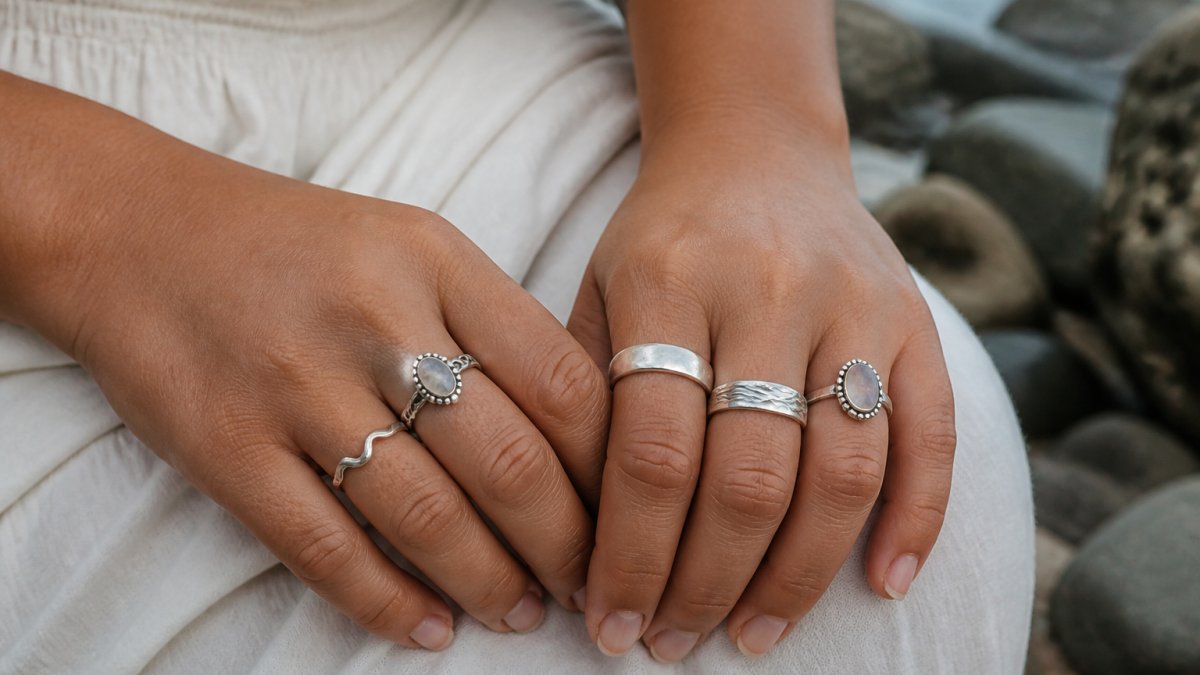
For ocean-inspired style with more visual interest, handmade designs with textured finishes or gemstones like Larimar add personality without sacrificing wearability. The Larimar and Moonstone Balance Ring from Inner Wild Jewelry pairs visual appeal with a secure bezel setting for everyday wear.

Consider your climate: wider bands feel more comfortable in warm weather, thinner bands in cold.
Choosing everyday wear handmade silver rings means investing in pieces that reflect your values and withstand daily life.
Frequently Asked Questions
Can you wear a sterling silver ring every day?
Yes, sterling silver rings can be worn daily if they're crafted with durability in mind. Look for handmade pieces with solid construction and proper thickness. Sterling silver (925 silver) is strong enough for everyday wear when the ring design avoids delicate elements. Regular cleaning and tarnish prevention help maintain appearance over time. Pieces like Inner Wild Jewelry's Larimar Element Ring are specifically designed for daily wear.
How do you keep a silver ring from turning your finger green?
The green discoloration comes from copper content in sterling silver reacting with skin moisture and acids. Keep your ring clean and dry, remove it before showering or swimming. Store it in a dry place, and clean it regularly with a soft cloth.
What's the difference between 925 silver and other silver materials?
925 silver, also called sterling silver, contains 92.5% pure silver and 7.5% other metals (usually copper). This blend makes it durable enough for everyday wear while maintaining silver's beauty. Pure silver (999) is too soft for rings that get daily use. Always look for a 925 hallmark on handmade pieces, it's your assurance of genuine sterling silver quality and longevity.
How often should I clean my handmade silver ring?
Clean your ring every 1-2 weeks if worn daily, or whenever you notice tarnishing. Use a soft microfiber cloth or silver-specific cleaning cloth for gentle polishing. For deeper cleaning, soak in mild soap and warm water, then dry completely. Avoid harsh chemicals and abrasive scrubbers that can damage handmade details or textured finishes. Regular maintenance prevents heavy tarnish buildup and keeps your ring looking fresh.