

Does Handmade Jewelry Tarnish Easily? Care Guide
Table of Contents
- Why Does Sterling Silver Tarnish?
- How to Prevent Silver Jewelry from Tarnishing
- How to Clean Tarnished Silver Jewelry Safely
- Does Gold Plated Jewelry Tarnish?
- Material-Specific Care for Mixed-Media Jewelry
- The Role of Anti-Tarnish Coatings and Plating
- Tarnish Prevention for Jewelry Makers vs. Consumers
- Conclusion: Keeping Your Handmade Treasures Shining
- Frequently Asked Questions
Last Updated: October 7, 2026
Why Does Sterling Silver Tarnish?
Sterling silver tarnishes because it reacts with sulfur compounds in the air. That reaction creates a dark layer on the surface.
This is the first thing to understand about jewelry tarnish: almost every piece will darken over time. The question is how fast.
Sterling silver is 92.5% pure silver mixed with 7.5% other metals, usually copper.
At Inner Wild Jewelry, every piece is handcrafted in sterling silver, so we think about this constantly.
The Role of Sulfur Compounds and Moisture
Sulfur is everywhere. It is in the air, in wool, in rubber bands, and in some foods. When sulfur meets silver, it forms silver sulfide. That is the black film you see.
Moisture speeds up the process. Humid air, sweaty skin, and damp storage all make tarnish worse.
Common sources of sulfur around your jewelry:
- Wool and felt storage pouches
- Rubber bands and latex
- Eggs, onions, and garlic in the kitchen
- Perfume, hairspray, and cosmetics
- Air pollution and car exhaust
The Environmental Protection Agency's air quality resources explains how airborne chemicals settle on surfaces. Your jewelry is one of those surfaces.
Tarnish vs. Corrosion: What's the Difference?
Tarnish is a thin surface layer that forms when metal reacts with sulfur. It changes color but does not eat into the metal.
Corrosion is deeper damage. The metal itself breaks down. Green skin marks from copper or brass are a mild form of corrosion.
Tarnish can be polished away. Corrosion often cannot. That is why prevention matters more than cleaning.
| Factor | Tarnish | Corrosion |
|---|---|---|
| Depth | Surface only | Into the metal |
| Cause | Sulfur reaction | Acid, salt, moisture |
| Fix | Polishing cloth | Often permanent |
| Speed | Days to months | Months to years |
How to Prevent Silver Jewelry from Tarnishing
Prevention comes down to one mechanism: keep sulfur and moisture away from the metal. Silver sulfide forms on the surface, so anything that blocks air contact or absorbs sulfur slows the reaction. That is why a sealed bag beats an open dish, and why a worn ring often stays brighter than one sitting in a drawer for months.
Here is the prevention routine, ordered from most to least effective:
- Seal each piece in an airtight bag with the air pressed out
- Add an anti-tarnish strip or tab to absorb sulfur
- Keep pieces separated so they do not scratch each other
- Put jewelry on last, after lotion, perfume, and hairspray
- Take it off before swimming, showering, dishwashing, or cleaning
- Wipe it with a soft cloth before it goes back in storage
Airtight Storage and Anti-Tarnish Strips
Anti-tarnish strips are small paper squares treated with activated carbon or a similar sulfur-absorbing material.
Airtight storage does the rest. A zip-top bag with the air pressed out works better than an open dish because it limits the sulfur-laden air that reaches the metal.
Humidity matters more than most people realize. A bathroom counter, a windowsill, or a basement drawer will darken silver faster than a climate-controlled closet.
Preventative Measures for Daily Wear
Wear your silver often. The natural oils on your skin can slow tarnish on some people by creating a thin barrier against air. But body chemistry varies widely, some people have more acidic skin pH, and their jewelry tarnishes noticeably faster. Sweat, salt, and cosmetics all accelerate the reaction.
A few daily habits go a long way:
- Apply perfume and lotion before your jewelry, not after
- Remove rings before washing dishes, gardening, or handling cleaning products
- Dry your hands fully before touching silver
- Rotate your pieces so none sit untouched for months
- Keep a polishing cloth in your jewelry drawer for quick touch-ups
Prevention for Makers vs. Consumers
This is where most guides stop short. A maker's tarnish problem is different from a buyer's, and the fix is different too.
For makers, prevention starts at the bench and continues through shipping:
- Seal finished pieces in anti-tarnish bags before they go into inventory
- Handle with clean, dry hands or nitrile gloves, skin oils and salts leave residue
- Skip wool polishing pads for final storage; use cotton or microfiber
- Include a care card with every order so buyers know how to store the piece
- Rotate older inventory to the front so nothing sits for a year untouched
For buyers, prevention is about storage and daily habits. Keep silver dry, keep it sealed, and wear it often.
The takeaway: tarnish prevention is not one tip. It is a system that changes depending on whether you are protecting inventory or protecting a piece you love.
How to Clean Tarnished Silver Jewelry Safely
The safest way to clean tarnished silver jewelry is a soft polishing cloth for light tarnish and a mild silver cleaning solution for heavier buildup.
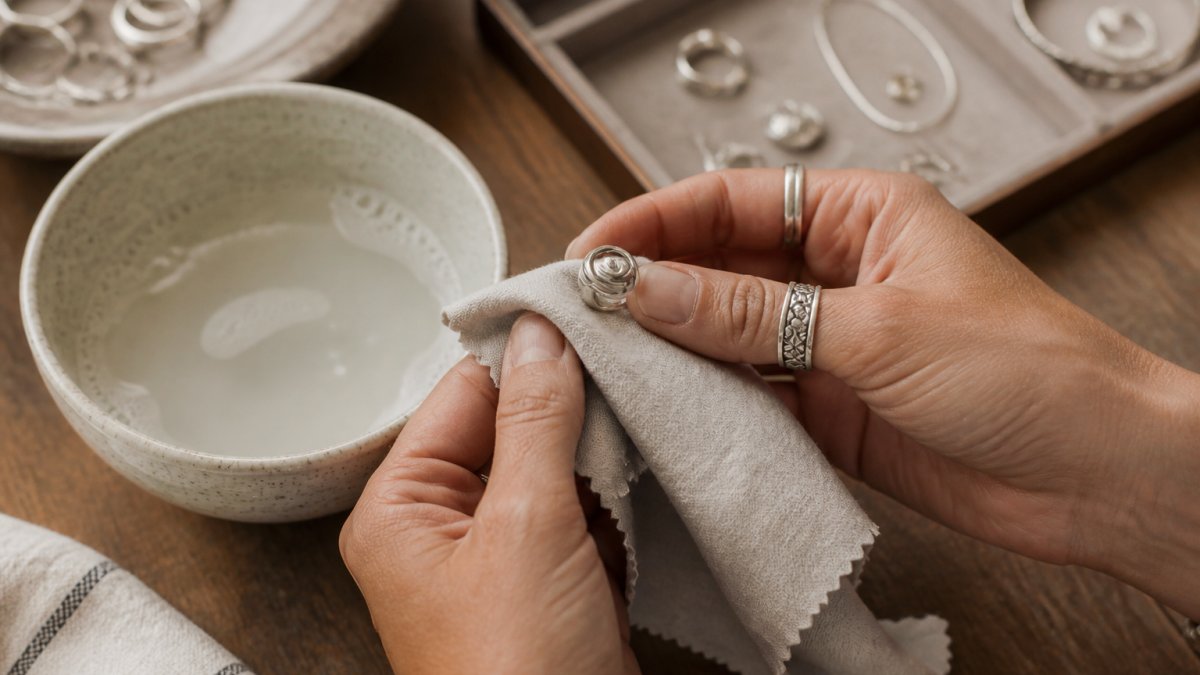
Start gentle. Most tarnish comes off with a dry cloth and a little patience.
Using a Polishing Cloth and Jewelry Cleaning Solution
A polishing cloth has two sides. The treated side removes tarnish. The soft side buffs the metal to a shine.
For deeper tarnish, use a silver cleaning solution. Dip, rinse, and dry right away. Leaving moisture on the metal undoes your work.
What to avoid:
The Element Ring - Larimar | Handmade Silver Ocean Inspired Ring // Size 7 →
- Toothpaste and baking soda on gemstones
- Paper towels, which scratch
- Ultrasonic cleaners on soft stones like moonstone or pearl
- Harsh chemicals near Larimar, which is a softer stone
Does Gold Plated Jewelry Tarnish?
Gold plated jewelry can tarnish, but not the way silver does. The gold layer itself resists tarnish. The problem is what sits underneath.
Most plated pieces use brass or copper as a base metal.
Plating thickness matters more than anything. A thicker layer lasts longer. Daily wear, sweat, and friction all wear plating down over time.
So the honest answer is this: plated jewelry tarnishes eventually, and there is no way around it.
Material-Specific Care for Mixed-Media Jewelry
Mixed-media pieces need different care for each material. A silver ring with a gemstone is not the same as a plain silver band. One cleaning method does not fit all.
Our Larimar and Moonstone Balance Ring pairs two gemstones in one silver design. Moonstone and Larimar are both softer than silver.

A simple rule: clean the metal, protect the stone.
| Material | Safe Method | Avoid |
|---|---|---|
| Sterling silver | Polishing cloth, silver dip | Abrasives |
| Larimar | Soft dry cloth | Chemicals, heat |
| Moonstone | Damp cloth, mild soap | Ultrasonic, acids |
| Pearls | Soft cloth only | Dips, perfume |
| Sea glass, shell | Damp cloth | Harsh scrubbing |
| Shark tooth | Dry soft brush | Soaking |
The Tempest Halo Necklace holds a fossilized shark tooth and Amazonite on a silver ring. The tooth is sturdy but porous. Dry brushing beats soaking every time.
The Role of Anti-Tarnish Coatings and Plating
Anti-tarnish coatings are a thin barrier applied over metal to block sulfur and air. They slow tarnish, but they do not stop it forever. Understanding how they fail is more useful than knowing they exist.
Common coatings and platings:
- Rhodium plating, a bright, hard, white-metal finish often used over sterling silver or white gold. Durable, but it wears at high-friction points and cannot be reapplied at home.
- Clear lacquer, an inexpensive sealant used on some mass-produced and craft pieces. It wears off with handling, and once it flakes, tarnish starts underneath in patches.
- E-coating, an electrostatically applied finish common on costume jewelry. It resists wear better than lacquer but is rarely used on fine handmade pieces.
- Oxidized (pre-darkened) finishes, a deliberate blackened layer on sterling silver, created with a sulfur-based solution. This is a design choice, not tarnish.
Here is what most guides miss: coatings wear away at the spots that touch your skin most. A ring's inner band, a pendant's bail, and a chain's clasp go first.
The Trade-Offs of Coating Handmade Jewelry
For makers, applying a clear coat is tempting, it promises a longer shelf life and fewer customer complaints. But there are real trade-offs:
- Reversibility. Lacquer and most clear coats cannot be easily removed without solvents that may damage stones or finishes. Rhodium and other platings require professional stripping.
- Aesthetics. A coating can dull the natural warmth of sterling silver or mute the depth of an oxidized finish.
- Maintenance. A coated piece cannot be polished the same way as bare silver. Abrasive cloths will scratch the coating, and silver dips may attack it.
- Honesty. If a piece is coated, the buyer should know. A coated piece is not the same as solid sterling silver, and it should not be marketed as if it were.
For buyers, the practical rule is simple: if you own a coated or plated piece, clean it gently and avoid abrasives. If you own bare sterling silver, you can polish it back to new again and again, which is one reason many handmade jewelers work in solid silver rather than plating.
Oxidized Finishes: When Dark Is the Point
Some handmade pieces use a pre-darkened, oxidized finish on purpose. The blackened recesses add contrast and depth, especially around textured or stamped designs. That is not tarnish.
If you own a piece with an oxidized finish, clean around it, not over it.
The bottom line: coatings and platings are a tool, not a cure. They buy time, but they change how a piece must be cleaned and cared for.
Tarnish Prevention for Jewelry Makers vs. Consumers
Makers and buyers fight tarnish in different ways. Makers prevent it before a piece ships. Consumers manage it after.
For makers, prevention starts at the bench:
- Seal finished pieces in anti-tarnish bags
- Handle with clean, dry hands or gloves
- Skip wool polishing pads for final storage
- Note care instructions with every order
For buyers, it comes down to storage and habits. Keep silver dry, keep it sealed, and wear it often.
Conclusion: Keeping Your Handmade Treasures Shining
Handmade silver is meant to be worn, not hidden away. A little care keeps it bright for years.
Our Larimar Element Ring and Ghost Tide Bangle are made to be worn daily, and each one comes with a story worth keeping. Handcrafted sterling silver, ocean-inspired stones, and a whole lot of soul.


Frequently Asked Questions
Does handmade jewelry tarnish easily?
It depends on the metals used. Handmade sterling silver jewelry tarnishes when exposed to sulfur compounds, moisture, and humidity in the air. This is a natural chemical reaction, not a defect. Pieces made from pure gold or titanium resist tarnishing, but most handmade silver pieces will need periodic cleaning to remove surface oxidation and restore shine.
Why did my 925 silver turn brown?
Sterling silver is 92.5% silver mixed with copper and other base metals. The copper reacts with sulfur in the air, turning the surface brown or black. This is called tarnish, and it sits on top of the metal, not inside it. A polishing cloth or jewelry cleaning solution removes it easily without damaging the piece.
How should handmade jewelry be stored to prevent tarnishing?
Store each piece in an airtight container or a zippered plastic bag with an anti-tarnish strip. Keep pieces separated to avoid scratches. Avoid humid spots like bathrooms. For jewelry with gemstones or pearls, wrap them in a soft cloth before placing them in the container. This limits air exposure and slows oxidation significantly.
Can tarnished handmade jewelry be cleaned?
Yes. Most tarnished silver can be restored with a polishing cloth, a mild jewelry cleaning solution, or a paste of baking soda and water. For pieces with gemstones or mixed materials, use a soft cloth and avoid soaking. If the tarnish is heavy or the piece has an oxidized finish, care should be taken to preserve the design.
Tarnish will find every piece eventually. The trick is making it slow down. At Inner Wild Jewelry, we craft each piece by hand in sterling silver, so it can be polished back to new instead of thrown away. Explore our ocean-inspired rings, pendants, and bangles, each one made to last and made to mean something. Add to cart and wear your inner wild.