

Why Handmade Jewelry Costs More
Table of Contents
- Why Handmade Jewelry Costs More: The Real Breakdown
- Skilled Labor and Time Investment Per Piece
- Material Sourcing and Cost of Goods Sold
- Handmade vs. Mass-Produced Jewelry: Understanding the Difference
- Overhead, Studio Maintenance, and Quality Control
- The Jewelry Pricing Formula for Makers
- Benefits of Buying Handmade Jewelry
- Why Your Investment in Handmade Jewelry Matters
- Frequently Asked Questions
Last Updated: September 23, 2026
Why Handmade Jewelry Costs More: The Real Breakdown
When you shop for jewelry, the price gap between a handmade piece and its mass-produced equivalent can feel jarring. A handmade silver bracelet might cost three times what a factory-made alternative costs. The reason isn't mysterious, and it's not just marketing. Handmade jewelry costs more because every step of the creation process demands skilled hands, quality materials, and time that industrial production simply doesn't require.
When you understand what goes into creating a single piece of jewelry, the pricing makes complete sense. It's not premium pricing for premium branding, it's the actual cost of making something by hand.
Skilled Labor and Time Investment Per Piece
The single largest cost factor in handmade jewelry is labor. A silversmith measures, cuts, hammers, files, solders, polishes, and finishes, each step requiring precision.
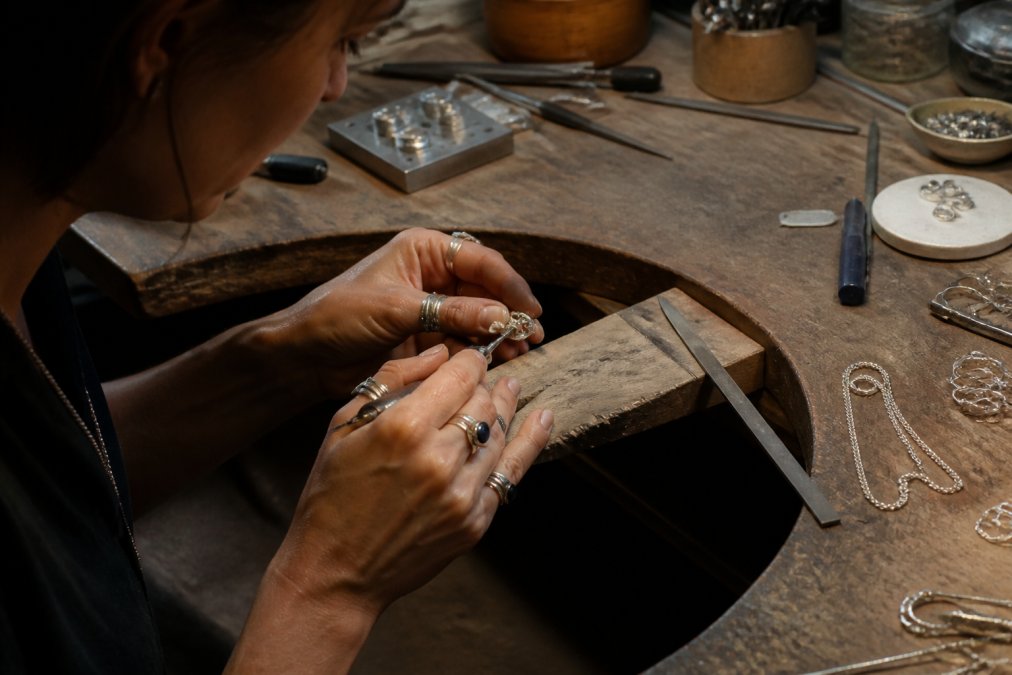
The labor cost reflects expertise: a skilled artisan minimizes waste, solders without damage, and achieves lasting finishes. That knowledge comes from years of practice. Material waste alone differs substantially between a beginner and a master.
Mass production eliminates most labor cost through automation. Machines cut hundreds of pieces per hour; robots don't need breaks or training. Per-unit labor cost drops to pennies.
When you buy handmade jewelry, you're directly paying for those hours and that expertise. It's the biggest line item in the price.
Material Sourcing and Cost of Goods Sold
Quality materials cost more. Sterling silver (.925) is significantly more expensive than plated alternatives or alloys, but it ages beautifully and lasts decades, while plating wears off and alloys tarnish.
Genuine gemstones, pearls, and accent materials cost more than plastic alternatives because they're authentic and durable.
Ethical sourcing from responsible suppliers adds cost, a factory using the lowest bidder will always undercut responsible makers.
The Hidden Cost of Failure and Prototyping
One of the largest unspoken costs in handmade jewelry production is the material lost to failed pieces, broken stones, and prototype development. This is a cost that mass manufacturers absorb differently, and it's rarely discussed in pricing guides.
Factories minimize defects through automation and catch failures before full material investment. Handmade makers discover defects after investing significant labor and materials.
Waste and Scrap Recovery
The cost of goods sold for a handmade piece reflects real materials, ethical sourcing, prototype investment, failure rates, and the reality of small-batch production. It's higher than factory pricing because the inputs are genuine, the waste is real, and the cost of learning and iteration is built into every piece.
Handmade vs. Mass-Produced Jewelry: Understanding the Difference
Mass production optimizes for volume and consistency: machinery is calibrated once, waste is minimized, and per-unit cost drops with scale. A factory making 50,000 identical bracelets can price each at a fraction of what a maker producing 50 unique pieces can charge.
Handmade production optimizes for uniqueness and quality. Each piece is made individually with no assembly line or standardization. That variation is part of the appeal and part of the cost.
Mass-produced pieces are designed to be profitable at scale; handmade pieces are designed to be excellent at any scale. A factory worker spends 5-10 minutes per piece; a skilled artisan spends hours. That's how the economics work.
Overhead, Studio Maintenance, and Quality Control
Running a jewelry studio requires rent, tool maintenance, equipment (torches, soldering stations, polishing wheels), and higher insurance due to fire and material loss risk. Health insurance, taxes, depreciation, and licensing hit solo artisans harder than corporations.
Quality Control as a Labor Cost
Quality control in handmade work is manual: every piece must be inspected for solder joints, clasps, stone setting, and finishes.
If a defect is found, the cost multiplies. A cracked stone requires replacement. A weak solder joint requires re-soldering, which risks damaging surrounding areas. A clasp that doesn't hold requires redesign and remake.
The Communication Gap: Why Customers Experience Sticker Shock
The biggest overhead cost that's rarely discussed is the non-billable time required to run a jewelry business: marketing, photography, customer service, packaging, shipping, and administrative work.
This is where the sticker shock happens. A customer sees a handmade bracelet priced at $180 and compares it to a factory piece at $25. They don't see the 6 hours of creation, the 0.5 hours of quality control, the 1.5 hours of business overhead, the $30 in materials, and the $20 in studio overhead allocation. They see a price difference and assume the handmade maker is overcharging.
Makers who successfully communicate value do so by making this overhead visible. They explain their process through behind-the-scenes content. They share how many hours go into each piece. They break down their pricing transparently. They help customers understand that the price isn't just for the physical object, it's for the expertise, the time, the quality control, and the entire business infrastructure required to deliver that object reliably.
Overhead is why a handmade maker can't price at factory rates. The overhead per unit is higher because the volume is lower, and the non-billable business work is more concentrated. This is basic economics, not a choice, but it's also an opportunity for makers to educate customers about what they're actually paying for.
The Jewelry Pricing Formula for Makers
Understanding how makers price their work reveals why handmade jewelry costs what it does.
Understanding the factors involved helps explain why a handmade bracelet costs more than a similar-looking factory piece. It's not that the handmade maker is greedy. It's that they're covering real costs that the factory avoids.
Benefits of Buying Handmade Jewelry
The price premium for handmade jewelry isn't arbitrary. It delivers real benefits that mass-produced alternatives don't.
Handmade pieces are durable. Because they're made from quality materials and built with care, they last. A sterling silver bracelet that's properly maintained will outlive multiple factory-made alternatives. The cost per year of wear is often lower for handmade, even though the upfront price is higher.
You're also buying uniqueness. When you wear a handmade piece, you're wearing something no one else owns. It's not one of 50,000 identical bracelets. That matters to people who value individuality and self-expression. Inner Wild Jewelry pieces embody this, each is crafted individually, reflecting the artisan's hand and vision.

There's also the connection factor. Knowing that a skilled person made your jewelry, that real care went into its creation, changes how you relate to it. It's not just an accessory. It's a wearable piece of art made by someone whose name you might know.
Handmade also often means ethical. A small maker has direct control over sourcing and labor practices. You're not funding a supply chain you can't see. You're supporting an individual or small team committed to their craft.
Finally, handmade jewelry tells a story. The maker's vision, the materials chosen, the technique used, these all communicate something. Factory jewelry is designed to be neutral, to appeal to everyone. Handmade jewelry has personality. It says something about both the maker and the wearer.
Why Your Investment in Handmade Jewelry Matters
When you buy handmade jewelry, you're making a choice about what you value. You're saying that uniqueness, quality, and the human element matter to you.
That choice has ripple effects. You're supporting a skilled artisan directly. You're keeping craft alive in an era of mass production. You're choosing durability over disposability. You're investing in something that will last, rather than buying something you'll replace in a year.
The price reflects all of this. It's not just the cost of materials and labor. It's the cost of choosing a different way of making things. It's the cost of supporting craftsmanship, ethical practices, and genuine artistry.
When you understand what goes into a handmade piece, the hours of skilled work, the quality materials, the overhead of running a studio, the expertise required, the price stops feeling expensive. It feels fair. It feels like you're getting what you're actually paying for.
Inner Wild Jewelry pieces like the Siren's Depth Bangle embody this value. Each piece is made to order, handcrafted in sterling silver with genuine gemstones. The price reflects the labor, materials, and care that go into every bangle. When you wear it, you're wearing hours of skilled work and genuine artistry.
The same applies to every handmade piece you consider. The cost isn't high because the maker is greedy. It's high because making something excellent by hand is genuinely expensive. And that's exactly why it's worth it.
Frequently Asked Questions
Is handmade jewelry more expensive than mass-produced pieces?
Yes, handmade jewelry typically costs significantly more than factory-made alternatives. The price difference reflects skilled labor, time investment, quality materials, and overhead costs that mass production avoids through automation. A handmade silver piece like Inner Wild's Tidebreaker Force Necklace at $145 represents hours of individual craftsmanship, whereas mass-produced versions use machine labor and cheaper materials. You're paying for artistry, durability, and uniqueness that assembly lines cannot replicate.
What factors contribute most to handmade jewelry pricing?
The primary cost drivers are skilled labor, materials quality, overhead expenses like studio space and tools, and time per piece. A maker's hourly rate, material sourcing, quality control, and profit margin all factor into the final price. Makers also account for failed pieces, inventory management, and shipping costs in their pricing formula.
How do I know handmade jewelry is worth the cost?
Handmade jewelry offers several advantages: each piece is unique, quality materials ensure longevity, artisan craftsmanship creates superior finishing, and you support small businesses and individual makers. Handmade pieces hold their value better than mass-produced jewelry and often become heirlooms. Look for makers who provide transparency about their process, materials, and turnaround times. Inner Wild's made-to-order pieces, like the Ghost Tide Bangle at $60, demonstrate this commitment to quality and authenticity.
What's the difference between the 2:1:1 pricing rule and other jewelry pricing formulas?
The 2:1:1 rule is a common wholesale pricing model: materials cost 1 part, labor 1 part, and overhead/profit 2 parts of the final retail price. Other makers use hourly rate formulas or markup multiples (2x-4x cost of materials). The best formula depends on your business model: wholesale vs. retail, made-to-order vs. inventory, and market positioning. Handmade makers often adjust formulas to reflect the true value of artistry and uniqueness rather than competing on price with mass-produced alternatives.
Handmade jewelry represents a choice to value quality, uniqueness, and craftsmanship over convenience and cost. The investment pays dividends in durability, beauty, and meaning. When you buy from artisans like those at Inner Wild Jewelry, you're supporting skilled makers who pour genuine care into every piece. That's not a premium you're paying, it's the actual cost of excellence. Start with a piece that speaks to you, and experience the difference handmade quality makes.