

Tooth and Tide vs Salty Babes: Handmade Jewelry Compared
Table of Contents
- What Tooth and Tide and Salty Babes Actually Are
- Handmade Shark Tooth Jewelry: Quick Comparison
- Ethical Jewelry Brands: How They Source Materials
- Sustainable Jewelry Brands: What Sets Them Apart
- Ethical Jewelry Sourcing: Fossil Teeth and Gemstone Standards
- Jewelry Brand Charitable Donations: Where Your Money Goes
- Which Brand Should You Choose?
- Frequently Asked Questions
Last Updated: October 17, 2026
What Tooth and Tide and Salty Babes Actually Are
Tooth and Tide vs Salty Babes both tap into the same nostalgic 90s beach vibe, work with shark teeth and ocean materials, and position themselves as artisanal alternatives to factory-made jewelry.

Neither name resolves to a single, universally documented entity.
Tooth and Tide is a hunting-and-sourcing identity first and a product line second.
Salty Babes reads primarily as a finished-jewelry brand built around look and lifestyle, ocean colors, layered styling, photogenic pieces, with materials sourced through suppliers rather than the founder's own beachcombing.
That difference is the whole comparison in miniature: in Tooth and Tide vs Salty Babes, one name sells the hunt, the other sells the finished object.
How to Tell Them Apart in Practice
Because both operate mainly through social platforms, the fastest way to distinguish them is to look at what an account actually posts and sells:
- Look at the grid, not the bio. A hunting-first account shows beach footage, tide charts, in-situ finds, and dirty hands. A product-first account shows styled flat-lays, model shots, and consistent studio lighting.
- Check whether the same item is restocked. Hunting-based sellers list one-of-a-kind pieces and rarely repeat an exact design. Product-based sellers restock popular SKUs.
- Read the sourcing language. Phrases like "found on the beach after low tide" point one way; phrases like "ethically sourced teeth" without a named supplier point the other.
- Ask where the tooth was found. A hunting-first seller can usually name the beach or at least the region. A product-first seller often cannot, because the material passed through a supplier.
- Check the price pattern. One-of-a-kind finds price irregularly; catalog pieces price consistently across a range.
What This Comparison Can and Cannot Tell You
Publicly available information supports a comparison of approach, hunting-led versus product-led, one-of-a-kind versus catalog, narrative-driven versus aesthetic-driven.
That limitation is why the comparison runs on observable criteria: design philosophy, price and availability, sourcing, sustainability claims, and charitable impact, each judged on what a buyer can verify rather than on what a brand says about itself.
At Inner Wild Jewelry, we honor the hunting philosophy, the tide-timed search, the reverence for a fossil that spent millions of years in the sand, while running a product-first studio with consistent availability and named conservation commitments.
Handmade Shark Tooth Jewelry: Quick Comparison
Handmade shark tooth jewelry has become the gold standard for buyers seeking authentic, ocean-connected pieces, but craftsmanship, sourcing, pricing, and design philosophy vary dramatically between brands.
Aspect |
Tooth and Tide Philosophy |
Salty Babes Approach |
Inner Wild Jewelry |
|---|---|---|---|
Primary Focus |
Hunting and sourcing experience |
Finished jewelry products |
Handcrafted silver pieces with conservation mission |
Material Sourcing |
Emphasis on personal discovery |
Supplier relationships |
Personal discovery and sustainably sourced fossilized shark teeth |
Price Range |
Varies by hunt success |
Mid-range |
$100-$295 per piece |
Design Aesthetic |
Minimal, hunt-focused |
Trendy, Instagram-optimized |
90s beach-inspired, artistic |
Charitable Impact |
Community-driven |
Brand-dependent |
Direct shark research support |
Best For |
Adventure seekers |
Convenience buyers |
Conscious collectors |
Design Philosophy and Aesthetic
Tooth and Tide's design philosophy centers on minimalism and the raw beauty of the fossil: simple leather cords, basic bezels, and letting the tooth dominate the visual space.
Salty Babes leans into trendier, Instagram-friendly aesthetics, colorful gemstones, layered designs, and a polished presentation designed to photograph well for fashion-conscious buyers.
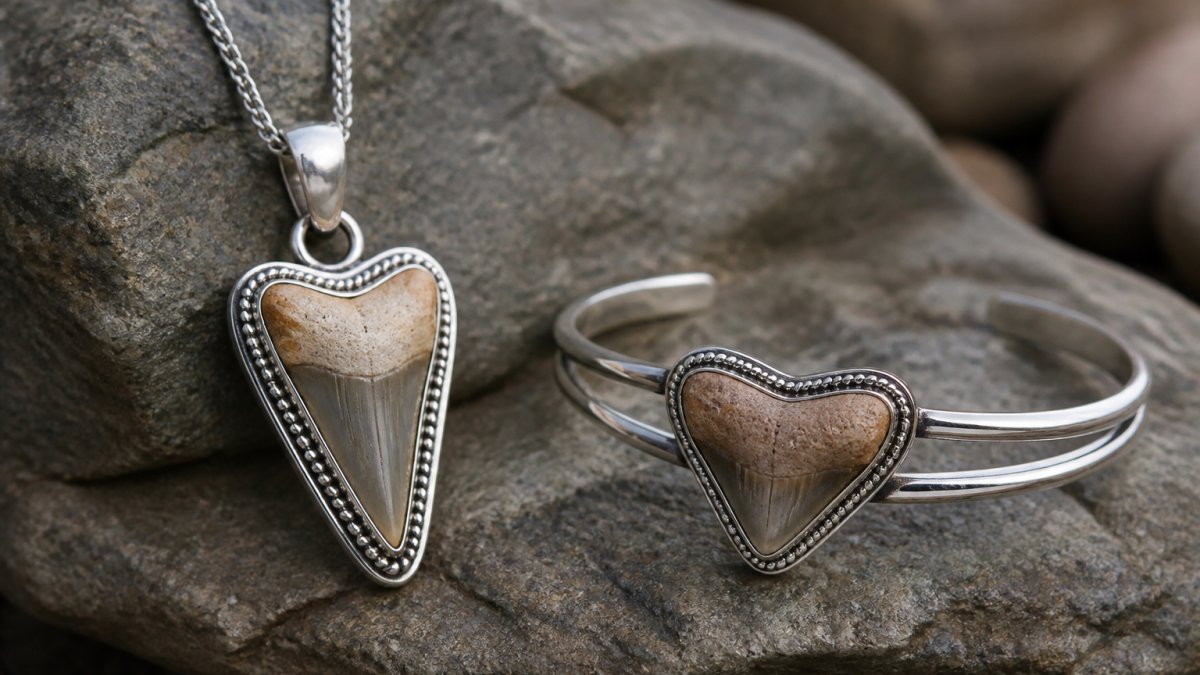
Inner Wild Jewelry honors both sensibilities. Our Tempest Halo Necklace ($100.00) pairs an authentic fossilized shark tooth with Amazonite in a handcrafted silver circle, balancing the raw and the refined.

Our 90s beach-inspired aesthetic nods to a time when people felt more connected to the ocean and less distracted by screens, a nostalgia our audience wants to reclaim.
Price Point and Availability
Tooth and Tide pieces vary wildly in price depending on what you find during your hunt, sometimes you walk away empty-handed, sometimes you find a specimen worth hundreds.
Salty Babes operates on a traditional e-commerce model with consistent pricing, though pieces tend to run higher due to brand positioning and design complexity.
Inner Wild Jewelry prices handmade pieces at $100-$295 depending on design and materials.
Hunting-based sourcing means Tooth and Tide pieces are limited by nature, you can't restock what the ocean hasn't revealed. Salty Babes maintains inventory but can sell out quickly on popular designs.
Ethical Jewelry Brands: How They Source Materials
The word "ethical" gets thrown around so casually in the jewelry industry that it has become almost meaningless. The real question is what it means in practice, and how a buyer would check.
Ethical sourcing in handmade jewelry starts with materials from responsible sources, not dredged from protected ecosystems, not harvested illegally, not tied to environmental destruction.
A fossil tooth is a legal, low-harm material in most contexts, but "fossil" is applied loosely. A tooth pulled from a modern shark, or collected from a protected area, carries a very different ethical profile than a beach-worn fossil.
A Practical Test for Any Sourcing Claim
Rather than trust the word "ethical," run every brand, including the two in this comparison, through the same five checks:
- Can they name the source? A region, a beach, a supplier, or a partner. "Sustainably sourced" with no noun attached is marketing, not sourcing.
- Is the material fossil or modern? Fossil teeth are inert and millions of years old; modern teeth raise animal-welfare questions. A brand should be able to say which it sells.
- Is the collection method described? Surface collecting on public beaches, beachcombing after storms, and supplier sourcing are three different practices with three different footprints.
- Are gemstones traced? Amazonite and similar stones come from specific regions, and responsible brands can say roughly where theirs originate and whether they are recycled or newly mined.
- Is the claim consistent across channels? The same sourcing language should appear on the product page, the social bio, and the packaging. Drift between them is a red flag.
How the Two Approaches Compare
Tooth and Tide's sourcing model is easier to audit because the sourcing is the activity. When material comes from personal beachcombing, surface collecting after low tide, often on public beaches where fossil teeth wash out of offshore beds, the footprint is minimal and provenance self-evident.
Salty Babes' model delegates sourcing to suppliers, as most jewelry brands do. That is not inherently less ethical, supplier relationships can be well vetted, but it moves the verification burden off the buyer's line of sight.
Inner Wild Jewelry commits to sustainably sourced fossilized shark teeth and works with suppliers who follow best practices and respect environmental regulations. Every Bite Club piece states that commitment on the product page, and our opal is sourced responsibly direct from a trusted source rather than through conflict or exploitative supply chains.
Why Fossil Teeth Change the Ethics Math
Fossilized shark teeth are unusual because the extraction already happened millions of years ago.
Tempest Halo Necklace | Shark Tooth and Abalone Silver Ring Pendant →
Gemstones like Amazonite introduce harder questions: where the stone originated, whether it was newly mined or recycled, and whether the supply chain is free of conflict and exploitative labor.
The takeaway is the same for all three approaches: ethical sourcing is a chain of custody, and a buyer's job is to see how many links the brand will show. Hunting-first sellers show the first link directly; product-first sellers show it only if they choose to.
Sustainable Jewelry Brands: What Sets Them Apart
Sustainability in jewelry goes beyond materials to production practices, waste reduction, longevity, and impact.
Many brands use "sustainable" to mean recycled packaging or metals.
Tooth and Tide's sustainability angle is inherent to the model: you're finding existing materials rather than extracting new ones.
Salty Babes likely focuses on sustainable materials and ethical sourcing, though the specifics depend on their supplier relationships and internal practices.
Inner Wild Jewelry embeds sustainability into every decision. Our Shark Teeth T-Shirt ($34.00) is made-to-order, which means we don't overproduce inventory that ends up in landfills.
Ethical Jewelry Sourcing: Fossil Teeth and Gemstone Standards
Fossil teeth present fewer ethical concerns than mined gemstones because they're already extracted, the damage (if any) happened millions of years ago.
Gemstones like Amazonite introduce different concerns: mining can damage ecosystems, exploit workers, and fuel conflict.
Tooth and Tide sidesteps gemstone concerns by focusing primarily on teeth and natural materials.
Salty Babes' gemstone standards depend on their supplier vetting, which isn't always transparent to consumers.
Our Tempest Halo Necklaces feature Amazonite sourced responsibly, paired with authentic fossilized shark teeth.
Jewelry Brand Charitable Donations: Where Your Money Goes
If a brand says they support conservation, they should name the organizations, the amount, and what the money actually funds.
Tooth and Tide's charitable impact is community-driven and informal, people who hunt together often share discoveries and knowledge, creating a culture of ocean stewardship.
Salty Babes' charitable commitments depend on their specific partnerships, which may or may not be clearly communicated.
Inner Wild Jewelry makes a direct commitment: every purchase in our Bite Club collection supports shark conservation and research. This isn't vague language.
Which Brand Should You Choose?
It depends on what you actually want.
Choose Tooth and Tide if you love the adventure as much as the jewelry.
Choose Salty Babes if you want trendy, Instagram-friendly ocean jewelry with consistent availability and don't require extreme transparency about sourcing and charitable impact.
Choose Inner Wild Jewelry if you want handcrafted silver pieces that honor both the hunting spirit and the conservation mission.
The difference comes down to this: we're not just selling jewelry. We're creating wearable reminders of your connection to the ocean and your commitment to protecting it.
Frequently Asked Questions
What materials do Tooth and Tide and Salty Babes use for their handmade shark tooth jewelry?
Both brands work with fossilized shark teeth and sterling silver as core materials. Tooth and Tide and Salty Babes source authentic fossil teeth rather than synthetic alternatives, ensuring each piece carries genuine ocean history. They may incorporate gemstones like amazonite or abalone for contrast and symbolism. Inner Wild Jewelry uses sustainably sourced fossilized shark teeth paired with sterling silver, with pieces like the Tempest Halo Necklace ($100.00) combining shark tooth with gemstones for meaningful balance.
How can I verify a jewelry brand's ethical jewelry sourcing claims?
Ask brands directly about their fossil sourcing—whether teeth come from ethical suppliers, dredged sites, or museum donations. Verify they don't source from endangered species or illegal operations. Check if they publish sourcing documentation or partner with recognized conservation organizations. Sustainable jewelry brands should disclose their supply chain transparently. Inner Wild Jewelry states that Bite Club pieces use sustainably sourced fossilized shark teeth and support shark conservation through every purchase, offering clear accountability.
Do Tooth and Tide or Salty Babes donate to wildlife conservation?
Both brands emphasize ocean conservation in their messaging, though specific donation structures vary by brand. Inner Wild Jewelry's Bite Club collection explicitly supports shark conservation and research with every purchase. When comparing ethical jewelry brands, request proof of charitable partnerships—nonprofit names, donation percentages, or annual impact reports. Vague conservation language without specifics is a red flag. Ask directly which organizations receive funding and request evidence of donations before purchasing.
Why is handmade shark tooth jewelry more expensive than factory-made alternatives?
Handmade pieces require skilled artisanship, authentic materials, and ethical sourcing—all cost more than mass production. Each shark tooth is unique, so no two pieces are identical, increasing design and labor time. Sterling silver carries material cost, and sustainably sourced fossils command premium prices. Ethical jewelry brands often donate portions of sales to conservation, adding to the final price. Inner Wild Jewelry's Tempest Halo Necklace ($100.00) and Bite Club cuffs ($155–$295) reflect genuine craftsmanship and conservation commitment, not factory markup.
Inner Wild Jewelry offers handmade silver pieces designed for ocean-hearted spirits who refuse factory-made compromises. Every piece supports shark conservation through direct research funding. Explore our Tempest Halo Necklaces and Bite Club collection to find the piece that speaks to your inner wild. Add to cart and wear your values.